

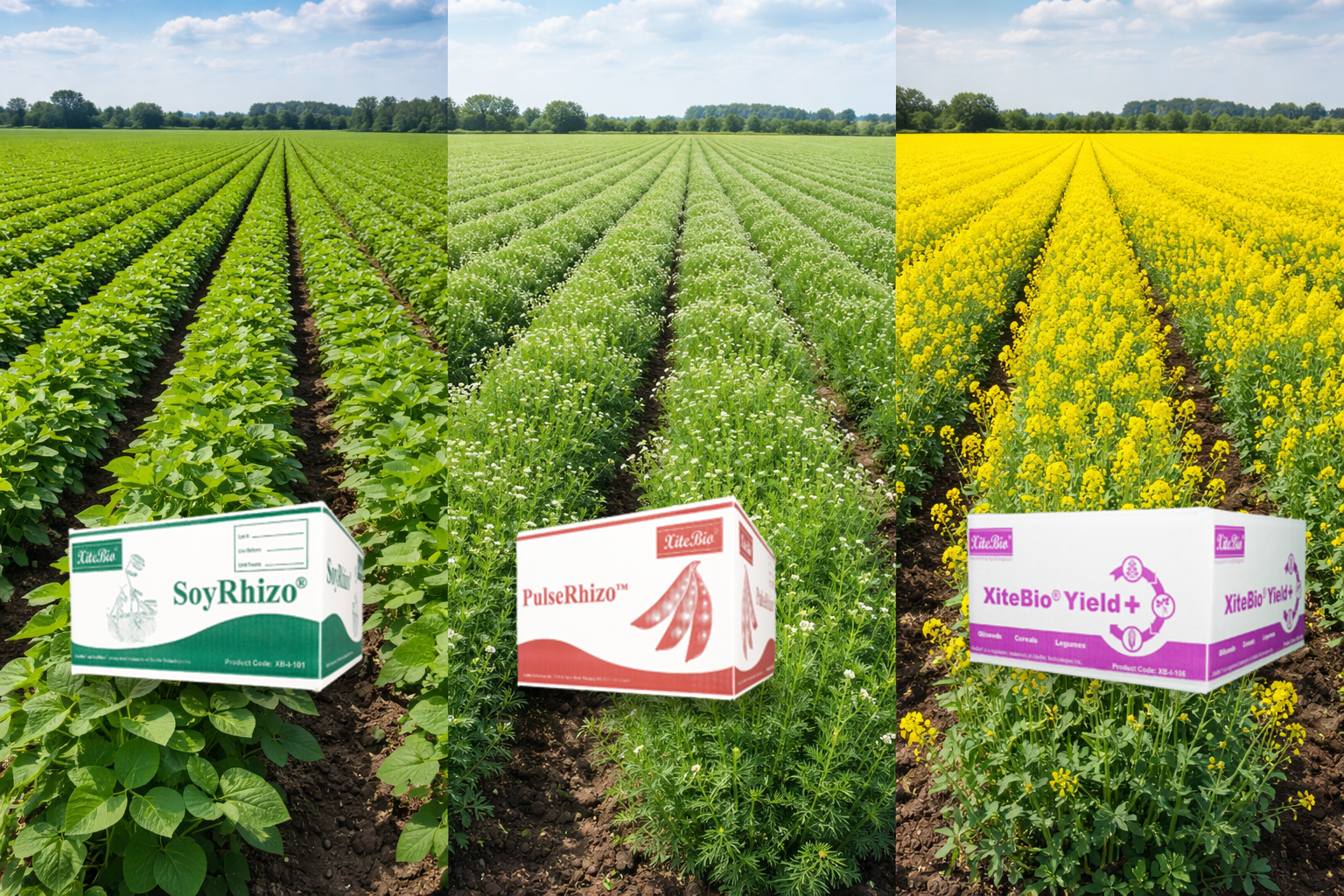
With the beginning of a new year, it’s a good time to start at the basics. In this week’s edition of Grow Possibilities, we discuss and learn about inoculants and why they are important. Inoculants are one of the most exciting tools in modern agriculture and sustainable farming. In plain terms, inoculants are beneficial microorganisms that are added to soil or seeds to improve plant growth and soil health. While they may sound technical, their role is rooted in natural soil biology and can offer big benefits to crop production and the environment.
Soil and seed inoculants contain living microbes that interact with plant roots and the surrounding soil. These can include nitrogen-fixing bacteria like Rhizobium for legumes, as well as other beneficial bacteria that help with nutrient cycling and growth promotion (1).
One of the biggest benefits of inoculants is their ability to unlock nutrients that plants can’t access on their own. One example is nitrogen-fixing bacteria like Bradyrhizobium japonicum, which can convert nitrogen from the air into a form plants can use, especially in legumes like soybeans. This natural process can supply much of the nitrogen a crop needs without synthetic fertilizers. Another example is a phosphorus-solubilizing ag-biological. Some microbes, like Bacillus firmus, release enzymes that make phosphorus more available which is an important nutrient often locked up in soil minerals (2).
By improving how plants access nutrients, inoculants help reduce reliance on chemical fertilizers, which can be expensive and environmentally harmful (3). Beyond nutrient cycling, many beneficial microbes produce growth-stimulating substances and improve root structure. Healthy root systems lead to more vigorous plants, better stress tolerance, and often higher yields (4).
Inoculants don’t just benefit individual crops; they also help improve the soil ecosystem itself. Some of the other benefits include improved soil structure and water retention, support for organic matter breakdown, increased soil biodiversity, and suppression of harmful disease organisms through competition and microbial interactions. Collectively, these effects lead to healthier, more resilient soils that support productive and sustainable crop systems (5).
Farms using inoculants often see lower fertilizer and pesticide costs because many microbial partners improve nutrient use and help suppress pests and diseases biologically. There are also environmental gains, including reduced nutrient runoff into waterways and lower greenhouse gas emissions from synthetic fertilizer production (6).
In summary, inoculants are a natural way to enhance soil life, boost plant performance, and push agriculture toward sustainability. At XiteBio Technologies, we have options depending on your crop needs. For soybeans, our N-fixing inoculant, XiteBio® SoyRhizo®, is the way to go. For pulse crops, we offer another N-fixing product in XiteBio® PulseRhizo®. If it’s a P-solubilizer you’re in the market for, we have XiteBio® Yield+, XiteBio® Tuber+, or XiteBio® Vegi+, depending on your crop. An XiteBio product could be the missing link to healthier plants and better yields. For more information, contact one of our sales agronomists at xitebio.com or call 1-855-XITEBIO (948-3246).
References
- https://gardenerbible.com/what-is-a-soil-inoculant/
- https://www.farmstandapp.com/61877/7-benefits-of-using-soil-inoculants/
- https://www.indogulfbioag.com/post/complete-guide-to-microbial-inoculants-benefits-types-production-methods-and-quality-standards
- https://www.mdpi.com/2674-1334/4/3/28
- https://pharmgrade.com/how-biological-inoculants-improve-soil-health/
- https://www.indogulfbioag.com/post/complete-guide-to-microbial-inoculants-benefits-types-production-methods-and-quality-standards