

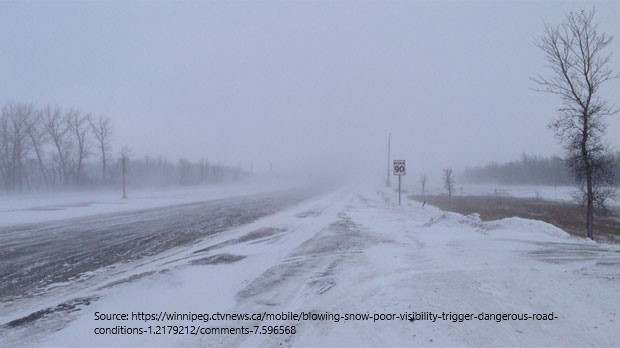
Right about now, many of us are counting down the days until spring arrives, all the snow melts, and we can begin seeding. This winter has been especially relentless in many areas, with record snowfalls and frigid temperatures. In this week’s edition of Growing the Possibilities we will look at how the conditions in the winter can have an effect on the productivity of your crops.
As many of you know, during the winter, in areas where the temperatures fall below freezing, the soil develops a layer of frost. You might ask yourself what causes this. This water which is contained in the soil will begin to freeze once temperatures drop below freezing which is 0 °C or 32 °F. This is what we know as the frost layer. The depth of this frost layer depends on a number of factors. An obvious factor is the temperature. The lower the temperatures throughout the winter, in general, the thicker the frost layer will get. The depth of the frost layer is also affected by snow cover. Snow insulates the soil, so the more snow that is covering the soil, the warmer the soil will stay, and therefore the shallower the frost layer. In addition to snow, surface cover such as trash and crop residue insulates the soil, resulting in a shallower frost layer. (1)
Now that we know about frost, what effect does this have on crop production? Well for those of you who may have applied nitrogen (N) in the fall, cooler soil temperatures can actually be beneficial, as it will help to keep the N from vaporizing (volatilization) over the winter (2). Additionally, cooler soil temperatures can help to kill insect pests that reside in the soil (3). So those are some positive side-effects of cool winter temperatures, but what are some downsides? Well, some studies have shown that cooler winter temperatures can result in less phosphorus (P) availability in the spring.
Maybe the greatest threat of cold winter temperatures is for those of you who have planted cover crops such as winter wheat. While cover crops are able to survive cool temperatures, extreme cold can be harmful. Temperatures between -30 to -40 °C can be lethal to winter wheat for example. Additionally, freeze-thaw conditions where temperatures rise above freezing, then fall back below freezing can also be harmful to cover crops such as winter wheat. The ice that forms from this phenomenon can block gaseous exchange between the plant roots and the atmosphere, and even lift the crowns out of the soil (4). This can be negated by having sufficient snow cover to insulate the cover crops and the soil. Having additional snow accumulation can also help in the spring by providing moisture early on. While we can’t control the amount of snow that falls, there are practices that can help prevent snow from being blown away. Cutting crop stubble high is effective at increasing snow accumulation. While cutting stubble short reduces snow accumulation, similar moisture retention can be maintained by ensuring that straw and spread evenly over the soil surface (5).
How does all of this affect microbial activity you may ask? Well, many soil microbes can survive our cold winter temperatures (6), with some able to survive temperatures as low as -39 °C (7). This is good news for those of you with cover crops, as soil microbes as we know are very beneficial in crop production. You can even increase soil microbe activity for your winter crops by applying biologicals such as XiteBio® Yield+, which solubilizes P, making it more readily available for your crop.
References:
- https://soilsmatter.wordpress.com/2016/01/14/what-happens-to-soil-in-winter-does-everything-die/
- https://journals.sagepub.com/doi/pdf/10.4137/ASWR.S8599
- https://www.agritechtomorrow.com/article/2018/06/top-article-for-2018-effects-of-extreme-weather-on-farming/10806
- https://extension.sdstate.edu/effects-snow-wheat
- https://www.producer.com/news/tall-stubble-good-for-saving-snow/
- https://academic.oup.com/femsec/article/30/2/101/608571
- https://www.sciencedirect.com/science/article/abs/pii/S0038071705002890