

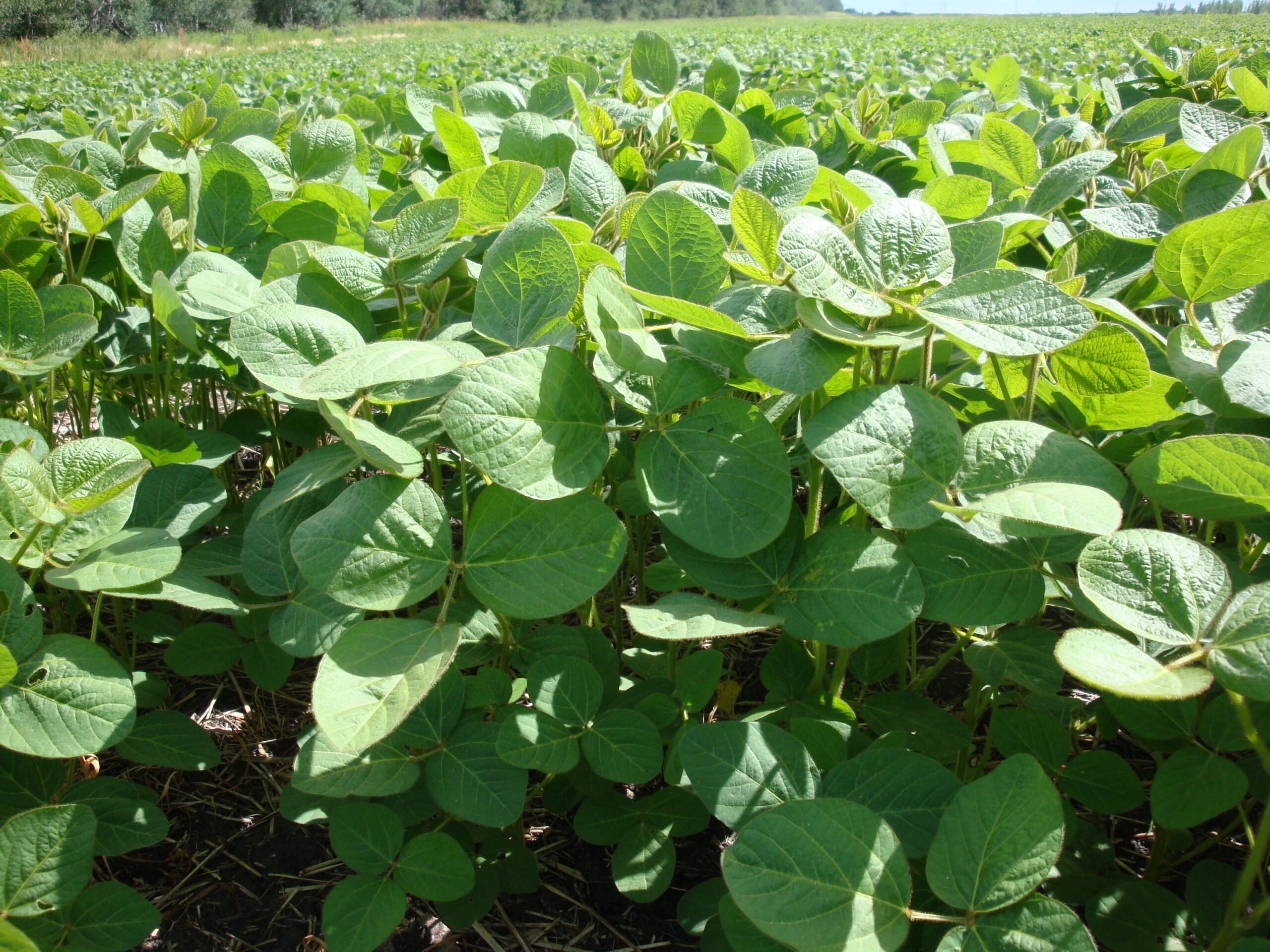
As we finish our first week in March, many of us are looking forward to the spring thaw which is just around the corner. While it may not seem like it with all the snow we currently have on the ground, this also means seeding is not too far off. As such, now is the time to start finalizing acres, of which many of you may be seeding soybeans. Soybeans, being a legume have unique fertility requirements compared to many cereal crops. In this week’s edition of Growing Possibilities we will be taking a closer look at the fertility requirements of soybeans, and how to get the most out of your crop.
As many of you know, soybeans are legumes, meaning they can fix nitrogen (N) when they form a symbiotic relationship with a rhizobacteria called Bradyrhizobium. When this relationship is formed the soybean roots develop nodules, which fix N. Because this rhizobacteria is not native to soils in North America, the soil must be inoculated with the bacteria for N-fixation to take place (1). So, you’ve inoculated your soil with Bradyrhizobium using seed treatment or in-furrow application. Does that mean all your fertility requirements are taken care of? In most cases the answer is no. While N plays an essential role in the growth and development of soybean plants, phosphorus (P), potassium (K) and iron (Fe) also play very important roles and are vital for the development of nodules.
Looking at P, soybeans are actually quite efficient at taking it up. Some studies have shown that on soils with high P concentration soybean yields did not respond to additional P fertilizer input. With that said, P fertilizer may still be required when soil test P is low. Fertility plans should ensure that P input is balanced with crop removal (2). Now moving on to K, soybeans like most other legumes have a rather high requirement compared to most non-legume annual crops grown on the prairies. This means the addition of potash fertilizer is often essential to meet the maximum yield potentials of soybeans. Finally, also unique to soybeans is their requirement for Fe. Insufficient Fe results in a condition called Iron Deficiency Chlorosis (IDC). While most soils are sufficient in Fe, environmental factors can reduce the availability of Fe. This includes salinity, excess moisture, excess nitrates or excess carbonates. While IDC often resolves itself, yield losses can result when the condition persists for over a week (3).
So, to summarize, soybeans are a great crop to have in the rotation because of it’s ability to fix N. But in order to achieve N-fixation and high yields, the requirements of other nutrients must be met, especially P, K and Fe. Fertilizer is typically needed to meet these needs, but growers can take their yields to the next level with XiteBio® Optiplus® AGPT® Dual Soybean Inoculant, which not only provides strong nodulation, but also provides increased P availability and Fe chelating to reduce IDC.
References