

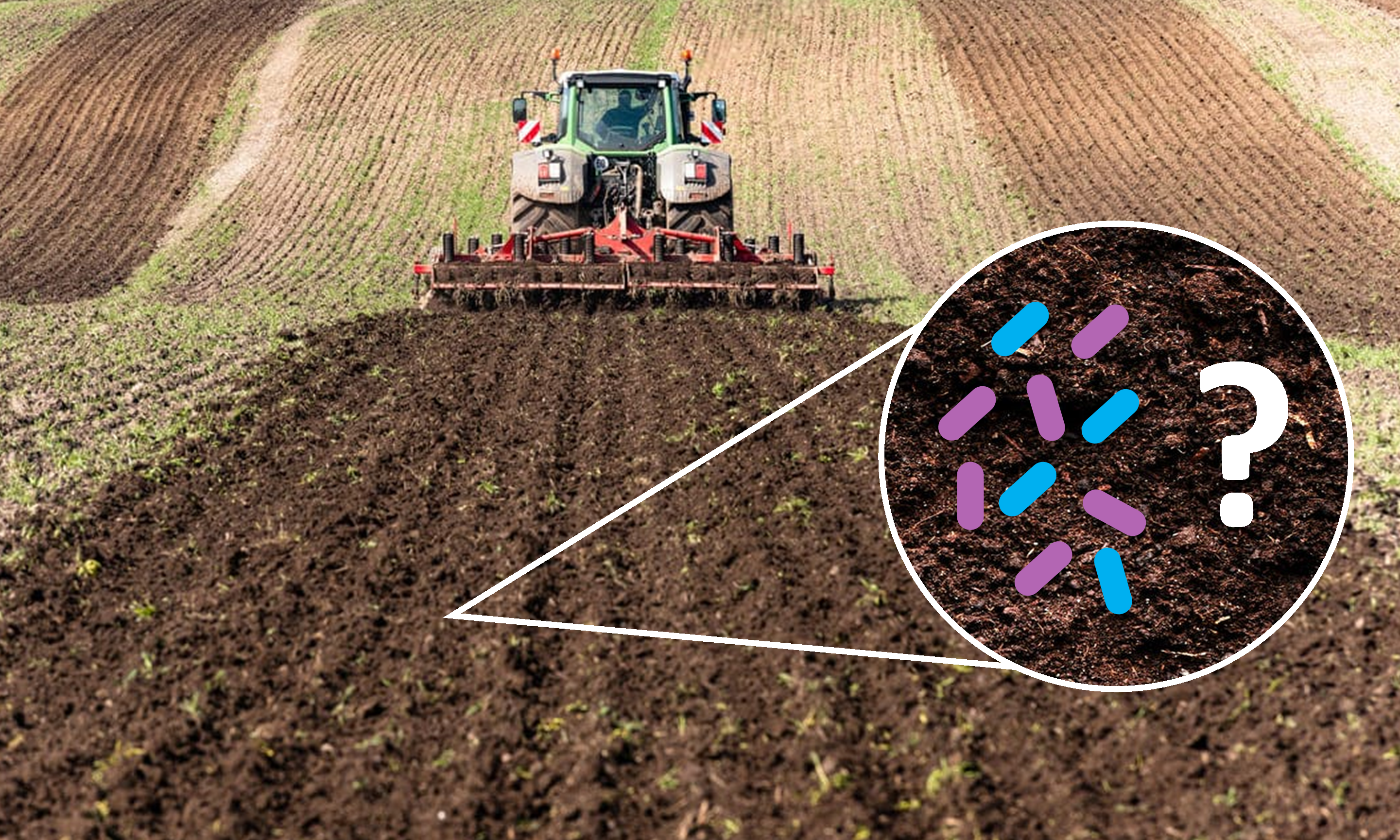
The benefits of soil tilling have been a hot topic of debate for growers around North America in recent years. Tilling aerates soils and introduces organic matter left over from harvest back into the field. This seems like an ideal thing to do, but it can have unforeseen consequences on the microbial life that processes that organic matter back into the soil. In this week’s edition of Growing Possibilities, we are going to weigh the pros and cons of tilling your fields from a new, smaller perspective: that of soil microbes.
Conserving organic matter from a previous crop is a cost-effective way of integrating existing nutrients back into your soil, and can reduce your fertilizer costs for the next growing season. Research into the effects of tilling on organic matter conservation showed that tilling can cause organic matter loss to be up to five times higher in conventional tilled fields when compared to no-till (1). When it comes to incorporating this organic matter back into the soil, microbes are the most essential workers doing this job. Soil microbes break down organic matter into nutrients like phosphorous (P), nitrogen (N), and potassium (K) and put plant-available nutrients back into your fields (2).
Soil microbes form communities around organic matter such as plant debris in the soil. These communities are called Microaggregates, and are the venue for organic matter breakdown by soil bacteria and fungi. Microaggregates of different microbial communities can become surrounded by plant roots or fungal hyphae and come together to form a protected environment of microbial activity called a Macroaggregate (3). Tilling can break up these Macroaggregates, disrupting the protective environment that these soil bacteria and fungi depend on.
When tilling modifies this environment, the soil microbes’ abilities to turn over organic matter, release soil nutrients, and build healthy functioning communities are also modified. A study on the effects of tilling on soil microbes found that fields with no-till or reduced tillage practices had larger, more active microbial communities with greater enzymatic activity (4). Fields using conservation tilling practices, using minimally invasive implements such as a chisel plow, showed no difference in microbial biomass or enzymatic activity when compared to no-till fields (2). This shows that even if you cannot go no-till, then even reducing your tilling will have a great effect on your soil microbial life.
Maintaining healthy, vigorous soil microbe populations is an essential part of healthy soil. Microbial activity and biomass are closely tied to soil health, and a healthy microbe population often correlates to the health and resilience of your field (2). A healthy field means a healthy crop, so consider your soil microbes when you are out tilling your fields!
1) https://www.realagriculture.com/2021/01/soil-school-does-organic-matter-really-matter
2) https://aces.illinois.edu/news/soil-microbes-flourish-reduced-tillage
3) https://www.realagriculture.com/2021/01/what-happens-to-soil-microbes-when-you-till
4) Stacy M. Zuber, María B. Villamil, Meta-analysis approach to assess effect of tillage on microbial biomass and enzyme activities, Soil Biology and Biochemistry, Volume 97, 2016, Pages 176-187, ISSN 0038-0717, https://doi.org/10.1016/j.soilbio.2016.03.011.)