

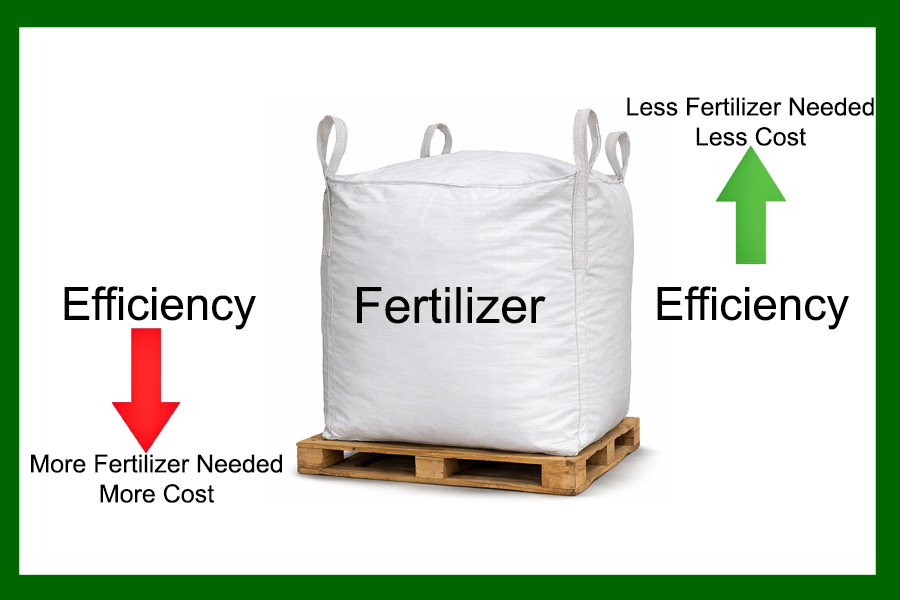
Fertilizer markets have experienced significant volatility in recent years, creating uncertainty for growers planning their fertility programs. A combination of geopolitical tensions, supply chain disruptions, and fluctuating energy prices has influenced both nitrogen and phosphorus fertilizer availability worldwide. As a result, improving nutrient efficiency and ensuring crops can access the nutrients already present in the soil has become an increasingly important focus for modern crop production. In this week’s edition of Growing Possibilities, we will explore the factors influencing fertilizer market volatility and discuss how improving nutrient efficiency can help growers manage these challenges.
Recent global events have highlighted how quickly fertilizer supply chains can be disrupted. For example, geopolitical conflicts affecting key shipping routes have slowed fertilizer shipments and raised concerns about supply shortages during critical planting periods. In some cases, fertilizer plants have temporarily shut down, or shipments have been delayed, tightening global supplies and contributing to rising fertilizer prices (1). When supply chains are strained, farmers often face higher input costs and limited product availability, making nutrient efficiency even more important.
Phosphorus markets have also experienced ongoing supply challenges. Export restrictions from major producing countries and growing global demand for fertilizer have contributed to tight supply conditions in recent years. Analysts have noted that phosphorus fertilizer markets have faced persistent supply pressures since the early 2020s, and these challenges may continue as global fertilizer demand grows alongside agricultural production (2). These dynamics can make fertilizer planning more complicated for growers, especially when fertilizer costs represent a large portion of overall production expenses (3).
At the same time, nutrient availability in soil is influenced by more than just the amount of fertilizer applied. Soil conditions, temperature, moisture, and microbial activity all play important roles in how nutrients move through the soil and become available to crops. In many soils, a portion of applied fertilizer can become tied up or temporarily unavailable to plants due to chemical reactions in the soil. This is particularly true for phosphorus, which can quickly bind to soil particles and become less accessible to crops.
Soil microorganisms play a central role in nutrient cycling and availability. Certain bacteria and fungi are capable of converting nutrients from unavailable forms into plant-available forms, supporting the natural nutrient cycle in agricultural soils (4). Phosphate-solubilizing microorganisms, for example, help release phosphorus that is bound in soil minerals or organic matter, making it available for plant uptake (5). These biological processes are an important component of soil health and can contribute to improved nutrient efficiency in crop production systems.
Because of these natural soil processes, many growers and agronomists are increasingly looking at ways to support soil microbial activity as part of a balanced fertility program. Biological products designed to support beneficial soil microbes are gaining attention as tools that can complement traditional fertilizer programs. Rather than replacing fertilizer, these technologies aim to help crops access nutrients more efficiently by supporting the biological processes that drive nutrient cycling in the soil.
In an environment where fertilizer markets remain uncertain, improving nutrient efficiency may offer one of the most practical strategies for managing input costs while maintaining crop productivity. By supporting the natural processes that make nutrients available in the soil, growers can help ensure that the fertilizer they apply is used as effectively as possible.
Products like XiteBio® SoyRhizo®, XiteBio® SoyRhizo® XV, and XiteBio® PulseRhizo® are formulated to support effective nitrogen fixation in legumes, while XiteBio® Yield+, XiteBio® Tuber+, and XiteBio® Vegi+ are designed to help improve phosphorus availability during critical early growth stages. For soybeans, XiteBio® OptiPlus® promotes both N-Fixation and improves P availability. When used alongside sound fertility practices and appropriate planting timing, these biological solutions can help crops make better use of available nutrients and establish strong early development.
References
- https://www.reuters.com/business/energy/iran-war-threatens-asia-fertiliser-supplies-ahead-planting-season-2026-03-05/
- https://www.dtnpf.com/agriculture/web/ag/crops/article/2024/12/19/phosphorous-fertilizer-supply-issues
- https://investingnews.com/agriculture-forecast/
- https://pmc.ncbi.nlm.nih.gov/articles/PMC7922199/
- https://www.mdpi.com/2077-0472/13/2/462