

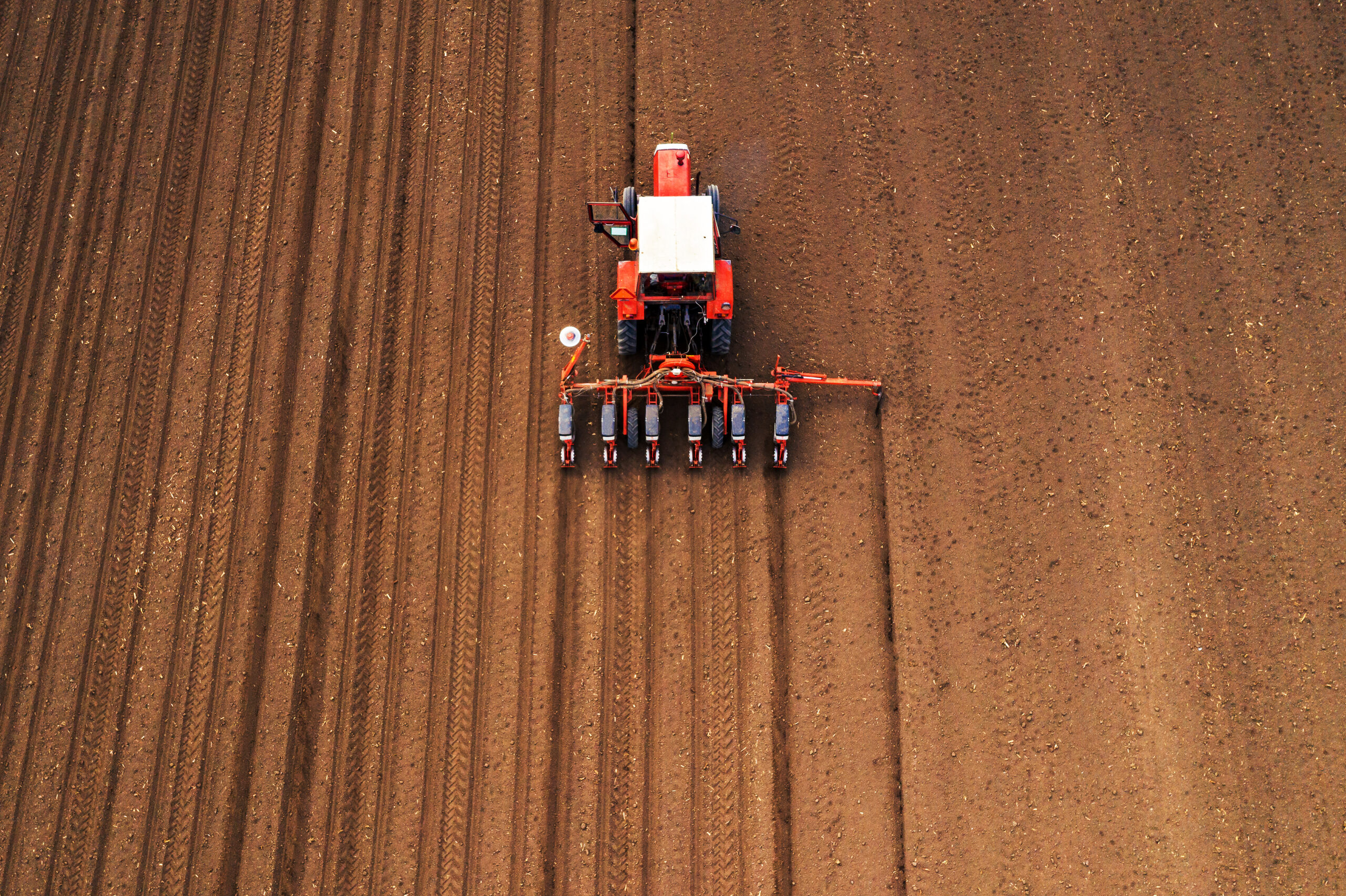
Fertilizer is one of the largest line items on most farm budgets. Yet a significant portion of applied nitrogen (N) and phosphorus (P) never actually makes it into the plant. Some is lost to the environment. Some becomes chemically unavailable in the soil. And some depends entirely on soil biology to be accessed by roots. Understanding where nutrients go after application is key to improving nutrient use efficiency and protecting your fertilizer investment. We will dive deeper into this in this week’s edition of Growing Possibilities.
N loss happens more than we think. N is highly dynamic in soil systems and can be lost several different ways (1). That means not every pound applied is necessarily a pound available to the crop. On the other side, P doesn’t leave but it gets locked up. Unlike N, P is not very mobile. Instead, it reacts with soil minerals and becomes chemically fixed. In acidic soils, phosphorus binds with iron and aluminum. In alkaline soils, it binds with calcium. Once tied up, it is far less available to plant roots. Even fields with high soil test P can experience reduced plant availability if fixation is occurring (2).
Soil microorganisms play a central role in nutrient cycling. Microbes can convert organic N into plant-available forms, solubilize P from insoluble mineral complexes and drives transformations that regulate nutrient supply to roots. In other words, fertilizer efficiency is not purely chemical, but it is biological (3).
If nutrients are lost or fixed, simply increasing fertilizer rates may not solve the issue. Improving nutrient use efficiency often comes from matching application timing with crop uptake, supporting active soil biology and managing placement and environmental conditions. The goal is not necessarily more fertilizer but better capture of what is already applied (4).
Biologicals are designed to complement fertilizers with the naturally occurring microbes. Their role is to enhance nutrient efficiency, and help crops make better use of what’s already applied. Inoculants support consistent N-fixation in legumes, while P-solubilizing microbes help convert tied-up soil phosphorus into forms roots can access. XiteBio® SoyRhizo®, XiteBio® SoyRhizo® XV, and XiteBio® PulseRhizo® are formulated to support effective nitrogen fixation, while XiteBio® Yield+, XiteBio® Tuber+, and XiteBio® Vegi+ are designed to improve phosphorus availability during critical early growth stages. For growers, that translates to improved nutrient performance and stronger return per acre. For retailers, it provides practical, agronomy-backed solutions that fit seamlessly into existing fertility programs. The objective isn’t complexity but its healthier plants and better yield.
References
- https://www.nrcs.usda.gov/sites/default/files/2022-09/nutrient_concepts.pdf
- https://www.agry.purdue.edu/ext/corn/news/articles.14/NutrientStewardship-020214.html
- https://academic.oup.com/plphys/article-abstract/156/3/989/6109028?redirectedFrom=fulltext&login=false
- https://link.springer.com/article/10.1007/BF03179980