

As spring seeding approaches, early-season decisions can have a lasting impact on crop performance. While seed selection, fertility and crop protection often take priority, inoculants are another input worth considering.
Seed inoculants for soybeans and pulses are biological tools that help plants access nitrogen through natural nitrogen fixation while supporting early root development. When used properly, they contribute to consistent crop establishment and overall yield potential.
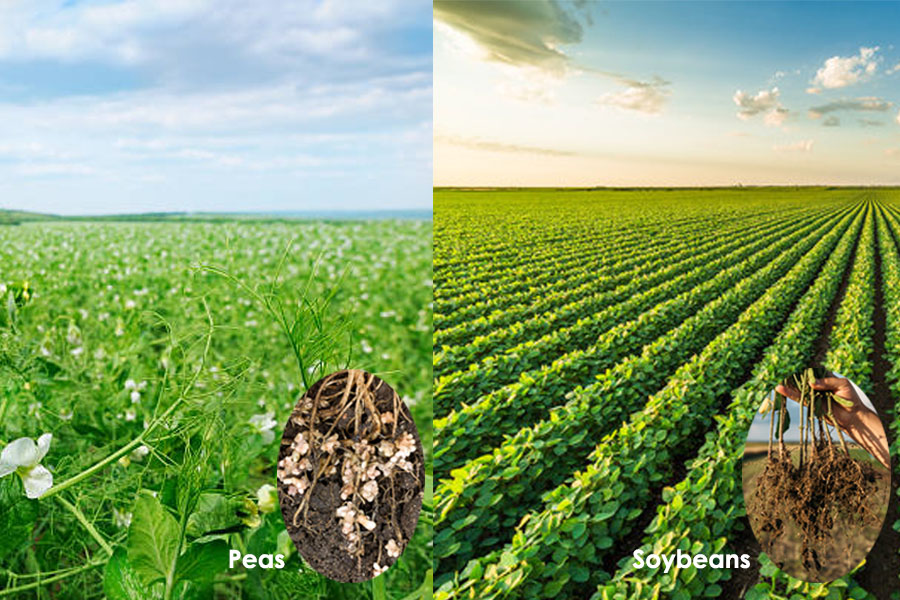
Legumes such as soybeans depend on a partnership with beneficial bacteria (rhizobia) that colonize the roots and convert atmospheric nitrogen into a plant-available form. This process can supply a significant portion of the crop’s nitrogen needs throughout the season (1).
However, native soil populations are not always consistent, particularly in fields with long rotations or first-time soybean or pulse production. In these situations, inoculation helps ensure adequate bacterial numbers are present at seeding (2). Delayed or weak nodulation can limit nitrogen availability and reduce yield potential early in the season.
Early growth begins below ground. Strong root systems improve access to nutrients and moisture and help plants better tolerate stress. Biological seed treatments are often used to support early root development and encourage beneficial microbial activity around the seed. For example, products such as XiteBio Yield+ focus on early root growth, while XiteBio SoyRhizo supplies crop-specific rhizobia to support nodulation and nitrogen fixation in soybeans.
Getting the most from inoculants starts with preparation. Checking inventory, confirming product shelf life and following proper storage guidelines all help maintain microbial viability. Biological products should be kept cool and stable, typically stored in a dry location between 4°C and 25°C. Compatibility with other seed treatments is also important to ensure bacterial survival and good seed contact.
Compared to many crop inputs, inoculants represent a relatively small cost per acre. Research and extension trials continue to show that proper inoculation improves nodulation consistency and can support soybean performance, particularly where native rhizobia levels are low (3).
For many growers, inoculants are now planned alongside seed and fertility programs as part of an overall crop management strategy, helping create a strong foundation for the season ahead.
In summary, inoculants offer a natural way to enhance soil life, support plant performance and improve nitrogen availability in legumes. Choosing the right product for the crop helps ensure consistent nodulation and early-season growth.
At XiteBio Technologies, options include XiteBio® PusleRhizo® for peas, lentils and faba beans or XiteBio® SoyRhizo® for soybean nitrogen fixation. While XiteBio® Yield+ can be used to support early root development. These technologies are also available together in XiteBio® OptiPlus® for growers who prefer a combined solution. More information can be found at xitebio.ca.
References