

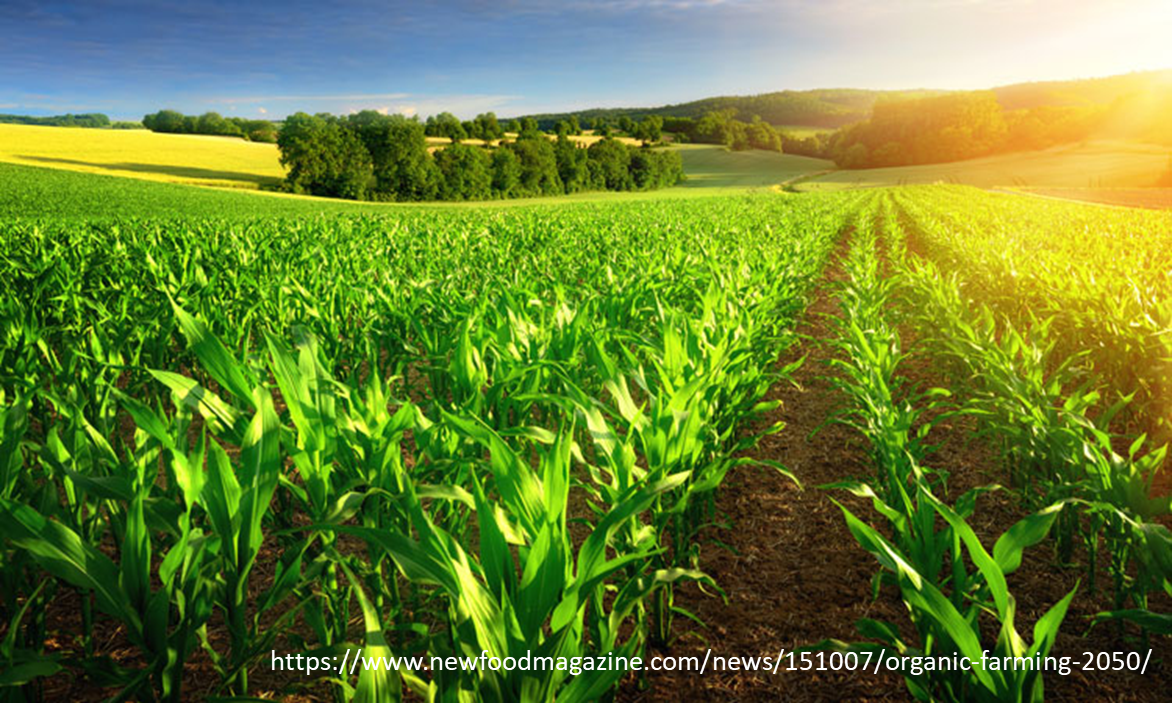
With Christmas only a day away, everyone is busy last minute stocking up on groceries, gifts and chocolates for the upcoming holidays. Some of you may be buying organic foods for your holiday meals. But have you ever wondered how organic farmers provide the nutrients for their crops? More specifically, how do they provide enough phosphorus (P) for their crops each year? In this week’s edition of Growing Possibilities, we will discuss what organic farming is and the various ways organic farmers can get P into the soil.
First off, what is organic farming? Organic farming involves following a few general principles that encourage eco-friendly, sustainable production. A few of these principles are minimizing soil degradation and erosion, optimizing biological productivity, and minimizing pollutants introduced into the ecosystem. There are a few strategies farmers can use to achieve these principles, like crop rotations, cover crops, and applying organic residues such as compost and manure. When it comes to crop inputs like fertilizers, they must be certified organic and on the Permitted Substances List for that specific area for farmers to use them. This means almost all commercial fertilizers are not usable for organic farmers since they are not produced according to organic standards (1).
Instead of commercial fertilizers, organic farmers rely on compost, green manure and animal manures for their nutrients like P. For those that don’t know, compost is decomposed plant and food wastes, whereas green manure is a crop grown to be plowed in while it’s still green (2). When these are added to the soil, you are fertilizing the soil not the plants. Soil acts as a conversion system; it receives, stores, transforms, transports, and exchanges plant nutrients. So when compost, green manure or animal manure is added to the soil, the nutrients like P are recycled in the soil and help future crops grow. This method of fertilization is good for small scale farm that have access to these materials, but is not practical for large scale farms. Also, manure and compost provide relatively less nutrients than synthetic fertilizers. This means organic farming only works if the soil is not seriously nutrient deficient. If the soil is highly deficient, it cannot be restored using just organic farming techniques, however, it can be through the use of synthetic fertilizers (3).
Another option for increasing P on organic farms is through the use of biologicals. Since of the use of natural soil microorganisms follows the principles of organic farming, biologicals are great for organic farming. Although not all biologicals are certified organic, XiteBio® Yield+ is approved for organic use. XiteBio® Yield+ releases compounds into the soil that solubilize the P from minerals like calcium and aluminum, making more P available for plant uptake. XiteBio® Yield+ also releases siderphores into the surrounding soil, which frees up the iron for the plants. Both of these processes follow the principles of organic farming since they are eco-friendly, sustainable, and minimize pollutants added to the soil by freeing up and using the nutrients already present in the soil. That’s why we suggest using XiteBio® Yield+ for all of your organic crop production.
References
- https://inspection.canada.ca/organic-products/standards/eng/1300368619837/1300368673172
- https://www.dal.ca/faculty/agriculture/oacc/en-home/about/about-oacc/documents/newspaper-articles/newsarticles-2010/newsarticle-2010-phosphorus.html
- https://fipr.floridapoly.edu/about-us/phosphate-primer/phosphate-and-organic-fertilization.php