

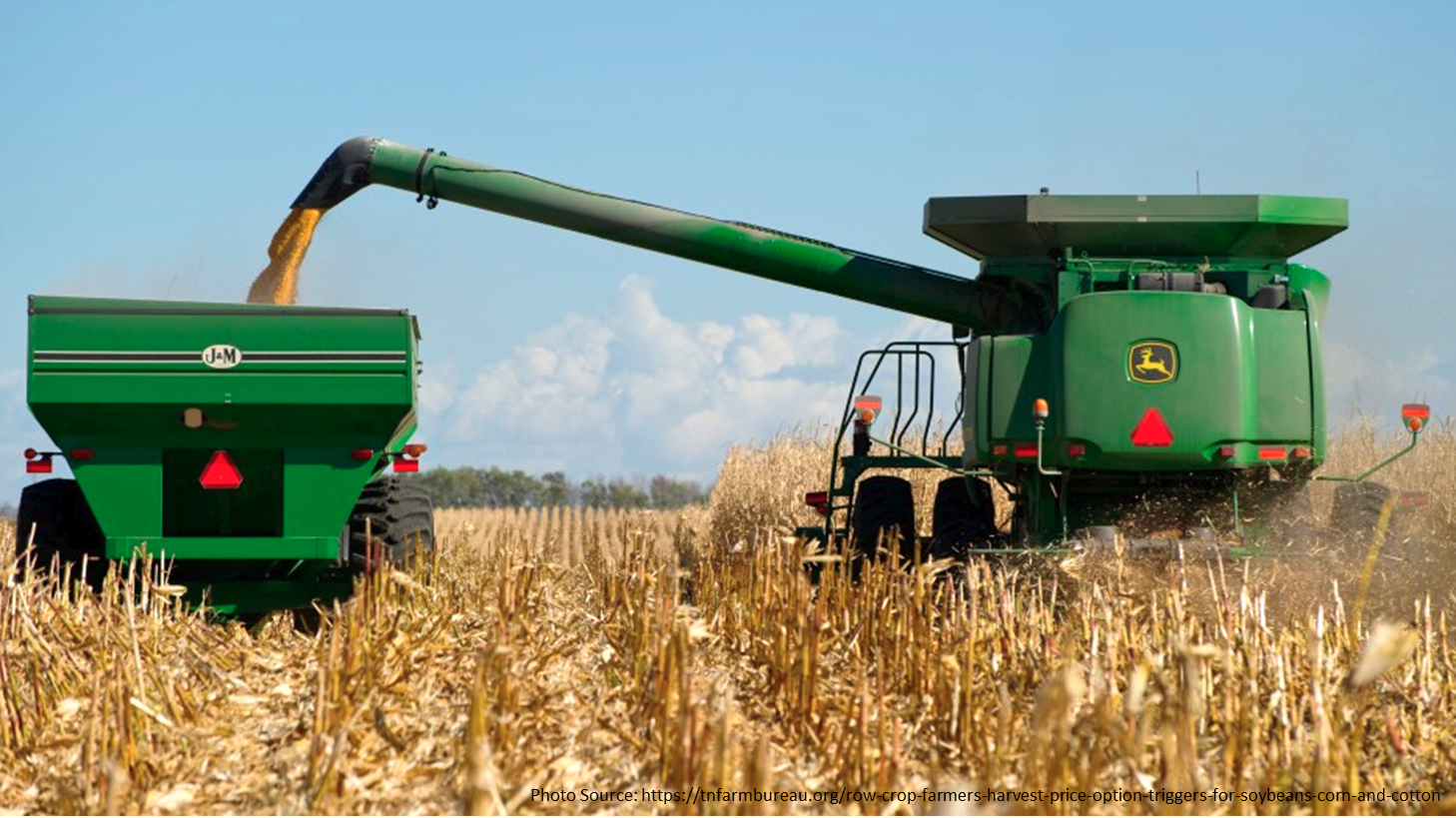
As the season comes to a close and the combines start rolling, crops are coming off of acres across North America. But your harvest isn’t the only thing leaving your field at the end of the season. A substantial portion of your soil nutrients can be taken with your harvested crop, so in this week’s edition of Growing Possibilities let’s discuss the importance of managing and replacing soil nutrients after harvest.
When discussing how soil nutrients are taken up by your crops, there are two terms we should define: Uptake and Removal. Uptake refers to nutrients the crop has taken up from the soil for its nutritional needs. Removal refers only to the nutrients contained in the harvested portion of the crop. Nutrients taken up but not present in the harvested portion can potentially be returned to your soil after harvest through crop residues.
Uptake and removal of different nutrients varies for every crop, but one thing remains constant: a higher yield means more nutrients removed. For example, when soybean yields increase from 55 to 75 bu/ac, an additional 15 lb of phosphorous (P) and 25 lb of potassium (K) are removed. In corn, increasing your yield from 180 bu/ac to 250 bu/ac, removes an additional 24 lbs of P and 18 lb of K (1). Knowing the uptake and removal rates you can expect from your crop can be very useful when planning your fertilizer inputs for next season. Below is a table of typical nutrient uptake & removal rates of some common row crops which should give you an idea of what to expect for your crop.
| Crop & Yield | N (lbs/ac) | P2O5 (lb/ac) | K2O (lb/ac) | S (lb/ac) | |
| Spring Wheat
(40 bu/ac) |
Uptake | 76-93 | 29-35 | 65-80 | 8-10 |
| Removal | 54-66 | 21-26 | 16-19 | 4-5 | |
| Winter Wheat
(75 bu/ac) |
Uptake | 61-74 | 27-34 | 64-78 | 9-11 |
| Removal | 47-57 | 23-28 | 15-19 | 6-8 | |
| Corn
(100 bu/ac) |
Uptake | 138-168 | 57-69 | 116-141 | 13-16 |
| Removal | 87-107 | 39-48 | 25-30 | 6-7 | |
| Canola
(35 bu/ac) |
Uptake | 100-123 | 46-57 | 73-89 | 17-21 |
| Removal | 61-74 | 33-40 | 16-20 | 10-12 | |
| Peas
(50 bu/ac) |
Uptake | 138-168 | 38-46 | 123-150 | 11-14 |
| Removal | 105-129 | 31-38 | 32-39 | 6-7 | |
| Dry Beans
(18 cwt/ac) |
Uptake | N/A | N/A | N/A | N/A |
| Removal | 75 | 25 | 25 | 5 | |
| Soybeans
(35 bu/ac) |
Uptake | 160-200 | 28-35 | 84-155 | 12 |
| Removal | 130-140 | 28-30 | 48-50 | 4 | |
| Potatoes
(4 cwt/ac) |
Uptake | 205-251 | 60-73 | 268-327 | 16-20 |
| Removal | 115-141 | 33-40 | 194-238 | 11-13 |
So how can you replace the nutrients harvest removes from your soil?
Applying chemical Fertilizers is the obvious method, but this can be costly to both your wallet and the sustainability of your field. Utilizing residues from previous crops and biological crop inputs are two cost-effective and sustainable ways to enhance your crop nutrition. Crop residues from legume plants are well-known for providing a wealth of nitrogen (N) to soil. A well-nodulated legume crop can provide N to the soil after harvest through residues but can also fulfill its own N nutrition through N-fixation. Well-nodulated legume crops can receive the majority of their N requirements through this method, which can reduce and even eliminate the need for applied N fertilizers on your legume crop (2). Rhizobial inoculants (e.g., XiteBio® SoyRhizo and XiteBio® PulseRhizo®) should be applied to your legume crops every year to ensure root nodules form and that N-fixation is at its maximum.
Utilising a P-solubilizing biological is another way of adding value to your crop fertility plans. More than 50% of the P in applied fertilizers gets bound by soil particles, creating phosphate compounds that plants cannot use (3). P-solubilizing bacteria (such as the active ingredient species in XiteBio® Yield+) free this P and create plant-available phosphates for your crop to use. This increases the efficiency of your applied fertilizers and also creates plant-available P from the P reserves already present in your soil, improving the sustainability of your operation.
References:
1) https://www.realagriculture.com/2020/10/soil-school-how-big-crop-yields-impact-soil-nutrients/
2) https://saskpulse.com/growing-pulses/
3) The Efficient Use of Phosphorus in Agricultural Soils, The Fertilizer Association of Ireland in association with Teagasc, Technical Bulletin Series – No. 4, February 2019
Source for Table: Canadian fertilizer Institute