

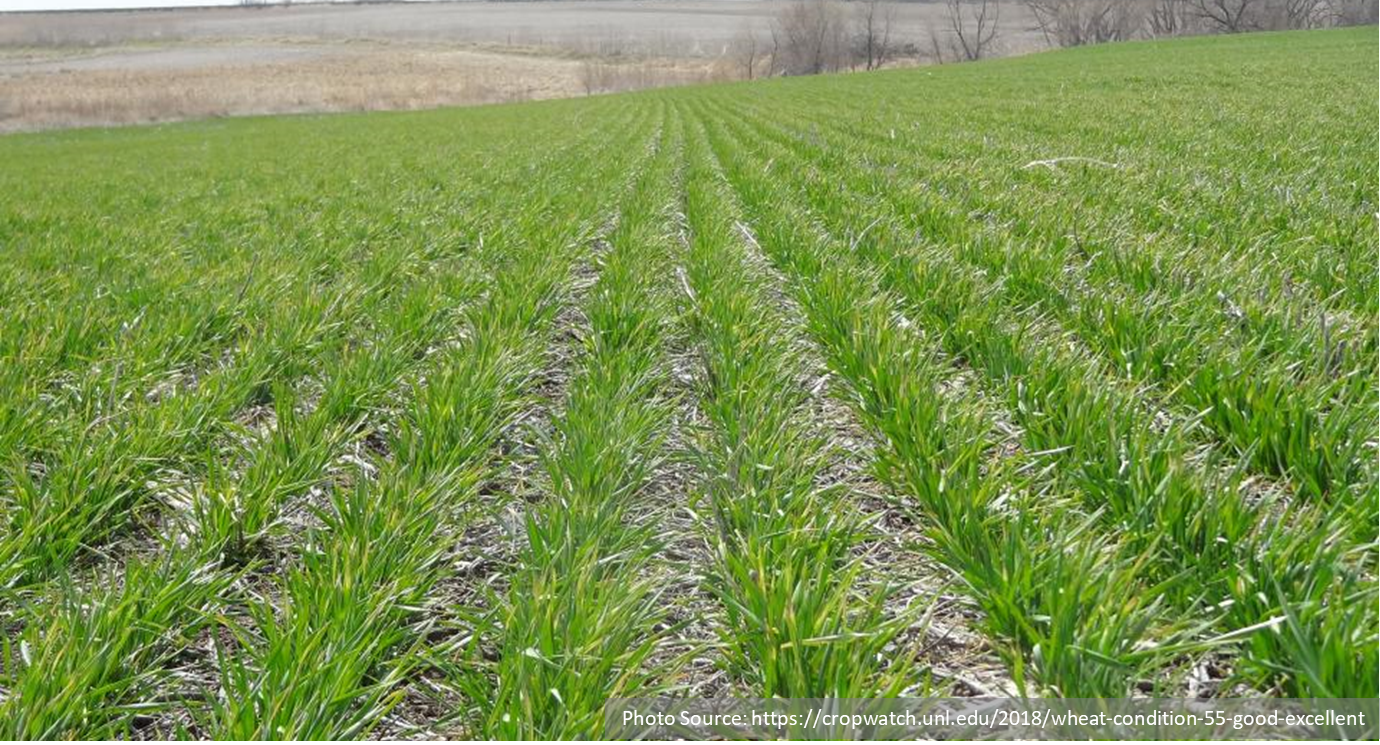
Fall seeded crops are growing in popularity across North American farm acres, and as harvest approaches many growers will be thinking about cultivating an overwinter cash crop to give their wallet a boost come spring. But there is more to consider with winter crops. Crops like winter wheat and winter peas can have numerous benefits in your fields, and can play a part in helping your field stay strong in the face of our changing climate. In this week’s edition of growing possibilities, we will look at how winter cover crops can give your fields an “off-season” boost and make them more resistant to heat and drought in years like this one.
It has been a tough year for growers across Canada, and while this year may be an outlier in the overall trend, these environmental factors are ones that will not be going away in years to come. So how can growers prepare for this in the future? While there is not a lot you can do to change Mother Nature’s mind, there are ways of mitigating the moisture and nutrient stressors that this weather can bring. One strategy that is growing in popularity here on the prairies is the use of cover crops over winter. Winter wheat is becoming a popular overwinter crop, with 1.5 million acres seeded in Canada in the fall of 2020 (1). The USA saw even more acres seeded in 2020 (30.4 million acres) with this number expected to reach 32 million in 2021 (2). So what can these crops do for your field?
Winter cover crops help out your fields in a few different ways, including:
- Blocking wind and preventing topsoil erosion
- Preventing moisture and nutrient loss underground by occupying soil with their root system
- Hold snow to insulate soil and provide more moisture during spring melting
- Providing soil microbes with a safe, insulated environment during the winter
- Interrupting weed, disease, and pest cycles depending on other crops in the rotation (3).
Using legumes as a cover crop offers the additional benefit of nitrogen (N) fixation and supplementing soil N. Winter peas, which split their N fixation between autumn months and the following spring, fix N for a total of approximately 12-16 weeks (3). In total this period of N-fixation lasts longer than that of a spring pea crop and can add 90-150 lbs/acre of N back into the soil (4). In a study of winter pea, rates of 180 lb N/Acre of fertilizer did not outperform fields with pea residues when growing barley (5).
Winter peas, just like spring peas, form symbiotic relationships with soil bacteria to fix N from the air, therefore a rhizobial inoculant is recommended for winter pea seeds to guarantee nodulation and maximize N fixation (5). If you are in need of a pulse inoculant for your winter pea crop, consider XiteBio PulseRhizo, our premium liquid pulse inoculant. Inoculating your winter crops with a Phosphorous (P) solubilizing biological is also a good way to ensure their early growth and establishment. Phosphorous is essential to producing healthy, high yielding plants regardless of the crop, but winter crops like winter cereals have a higher demand for it than their spring season counterparts. A winter wheat crop can require as much as 75 lbs/acre of P, a tall order for applied P2O5 fertilizers alone, especially over the winter (6). Inoculation with P-solubilizing bacteria, such as the Bacillus species found in XiteBio Yield+, can make more efficient use of both your applied fertilizers and soil-fixed P already present in the soil.
Utilizing a cover crop during the winter months could be a smart move for many growers who wish to keep their soil microbes healthy, their moisture levels high, and their fields in their best conditions for the following season.
References
1) Statistics Canada. Table 32-10-0359-01 Estimated areas, yield, production, average farm price and total farm value of principal field crops, in metric and imperial units
2) https://www.nass.usda.gov/Publications/Todays_Reports/reports/wtrc0121.pdf
3) McGee, R.J., Eigenbrode, S., Nelson , H., Schillinger, W. (2017). Re‐inventing Austrian winter pea towards developing food quality winter peas. Crops & Soils, 50(4). https://doi.org/10.2134/cs2017.50.0401)
4) Clark, Andy. Managing Cover Crops Profitably (3rd ed.). 2008. Beltsville, MD: Sustainable Agriculture Network. P. 135- 141.
5) https://www.covercrop.com/?p=214
6) https://www.ag.ndsu.edu/publications/crops/fertilizing-winter-wheat#section-4)