

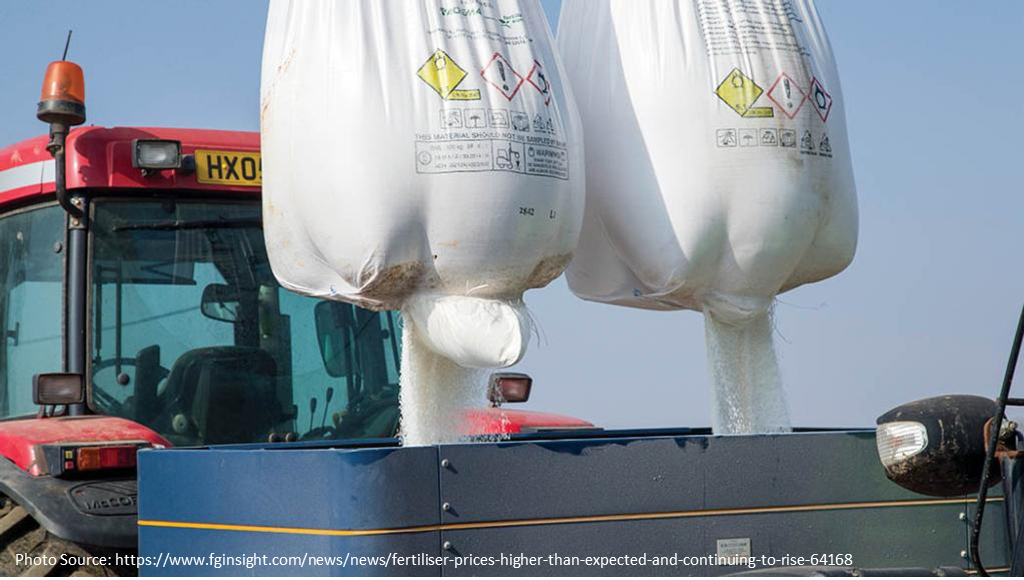
One of the first inputs every grower thinks about before each season is phosphorous (P). Phosphate fertilizers are applied to almost every field in North America, but there is more to soil P than just putting fertilizer on your acres every spring. In this week’s edition of growing possibilities, we are going to discuss the issues of sustainability in our P fertilizers, and the simple ways soil bacteria can make your soil fertility more sustainable.
Phosphorous is one of the most essential nutrients for plant growth and development, and there are several common ways P is added to soil: commercial fertilizers, manure, organic matter/plant debris, etc. with commercial fertilizers being one of the most common. The P in most fertilizers comes from mineral phosphate, which is mined, cleaned and transferred to the fertilizer industry where it is processed chemically into phosphate fertilizers (1).
Proper management of P inputs is necessary not only for protecting your investments and ensuring your crops get the nutrients they need, but also for protecting our natural resources. Inorganic P mined for use in fertilizers is a huge industry that farmers rely on, but it is also a non-renewable resource we will eventually run out of. Mineral P sources are being depleted more aggressively due to our globally expanding population and food insecurity issues in many parts of the world, with estimates projecting that our demand for mineral P will begin to outstrip supply as early as 2033 (2). As our current rock phosphate supplies are used up, the cost will continue to rise and the availability will become more scarce, something growers may already be all too familiar with. Because of this, increasing the efficiency of P applications to our soils is critical. Even more critical is finding ways to replace mineral P in our fertilizers and make use of more sustainable resources.
The efficiency of fertilizers you apply to your fields is quite low in terms of the actual nutrients that make it to your plants. Applied phosphate fertilizers have an average efficiency of less than 50% (3), meaning more than half of the fertilizer you put into your soil will not be available to your plants. Much of this P will instead become bound by soil particles, creating phosphate compounds that cannot be taken up by plant roots. Starter fertilizers applied in the spring when soil is still cold is even less efficient, as cold temperatures speed up this binding process.
A sustainable way of increasing this efficiency is by incorporating P-solubilizing bacteria into your crop input plan. These bacteria break the bonds between phosphates in the soil and soil particles that bind to them and lock them up, creating plant-available forms of P (like H2PO4– or HPO42-). This not only increases the efficiency of fertilizers you apply to the field, it also creates more plant available P from the natural phosphate reserves present in the soil.
Limiting P loss in your fields is important for keeping the P you already have. A significant amount of P is lost from fields every year due to runoff and erosion, with one study estimating 11.6 Kg per hectare is lost per year due to these conditions (4). Reducing tillage and planting cover crops are two common methods of reducing P lost to agricultural runoff and erosion and can conserve P while potentially reducing your fertilizer budget for the following season. Much of the P lost due to runoff and erosion is in the same forms of bound soil P that are unavailable to plants (4). Utilising P-solubilizers in your fertility plan can convert bound soil P into a form less susceptible to runoff or erosion, reducing P loss and maybe even your bottom line when it comes to buying fertilizer for your next crop.
References:
1) Cordell D, White S. Sustainable Phosphorus Measures: Strategies and Technologies for Achieving Phosphorus Security. Agronomy. 2013; 3(1):86-116. https://doi.org/10.3390/agronomy3010086
2) Duan, M., O’Dwyer, E., Stuckey, DC., Guo, M. (2019). Wastewater To Resource: Design of a Sustainable Phosphorus Recovery System. ChemistryOpen, 8(8):1109-1120. doi: 10.1002/open.201900189
3) The Efficient Use of Phosphorus in Agricultural Soils, The Fertilizer Association of Ireland in association with Teagasc, Technical Bulletin Series – No. 4, February 2019
4) Alewell, C., Ringeval, B., Ballabio, C. et al. Global phosphorus shortage will be aggravated by soil erosion. Nat Commun 11, 4546 (2020). https://doi.org/10.1038/s41467-020-18326-7