

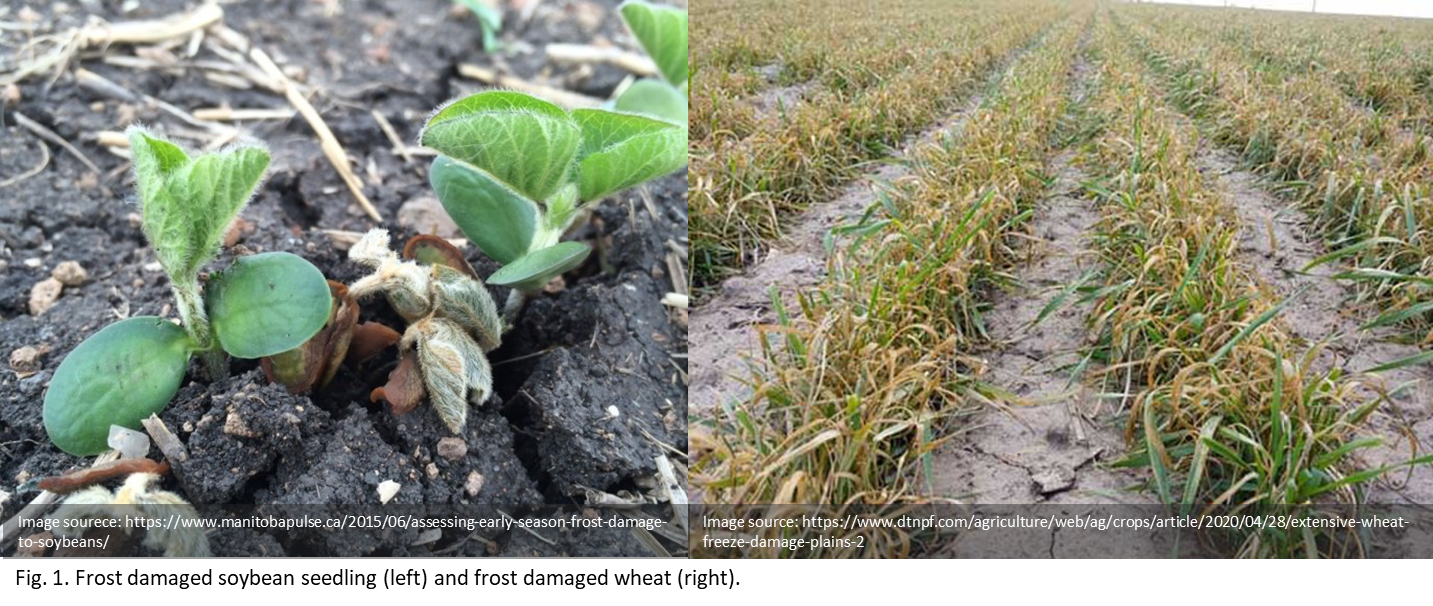
The weather is finally starting to warm up here on the prairies, but as we celebrate the warmer weather now, we were not so excited two weeks ago. Many places across Canada and the Midwestern USA saw overnight temps drop below freezing after seeding, with parts of Ontario seeing up to 3 days of overnight frost (1). As affected growers are considering re-seeding, one question should come to mind for the soil-focused grower: if this freezing affects my seeded crop, will it also affect my soil microbes? In this week’s edition of growing possibilities, we will look at how overnight spring frosts affect your soil microorganisms.
Cold temps can wreak havoc not only on plant seedling, but also on the bacteria living in their developing rhizospheres that those seedlings utilize for nutrient acquisition. Freezing causes severe physical damage to bacterial cells, and can reduce their effectiveness if not outright kill them. Below-freezing temperatures will have a significant effect on soil bacteria in the 0-10cm depth, while the opposite can be found in the 10-20 cm range. The surface layer of soil acts as an insulator for the soil below it, and a short period of overnight freezing temperatures should not be enough to penetrate to the lower areas (2).
Overnight freezing can mean death for the microbes in this top layer of soil, but it’s not clear sailing for the ones below just yet. Sustained freezing temperatures can affect the quality, quantity and turnover of soil organic matter and availability of water to soil microbial communities, which disrupts the carbon pool in soil by reducing carbon sequestration. This carbon pool is an important nutrient source from soil bacteria and freeze/thaw events like this negatively affect their habitat. The depletion of vigorous soil rhizobia populations during extended periods of freezing temperatures is the reason applying an inoculant is suggested for your pulses and soybeans yearly. Rhizobia that survive the winter are often in reduced numbers and not in optimum health. Rejuvenating these populations with fresh, healthy rhizobia will help your crop reach its full nodulation and nitrogen (N)-fixation potentials (3).
A short series of overnight frosts like we recently experienced may not kill off all of your rhizobia in the soil, but it may hurt enough of them to decrease the efficiency of your inoculant application. Events like this can reduce the effectiveness of bacteria towards forming nodules with your plants roots and ultimately fixing N.
To learn more about how your field and the environment around it can affect your soil microbial populations, check out the rest of our Growing Possibilities blog posts here.
References:
2) Perez-Mon C, Frey B and Frossard A (2020) Functional and Structural Responses of Arctic and Alpine Soil Prokaryotic and Fungal Communities Under Freeze-Thaw Cycles of Different Frequencies. Front. Microbiol. 11:982.
3) Liu M, Feng F, Cai T and Tang S (2020) Soil Microbial Community Response Differently to the Frequency and Strength of Freeze–Thaw Events in a Larix gmelinii Forest in the Daxing’an Mountains, China. Front. Microbiol. 11:1164.