

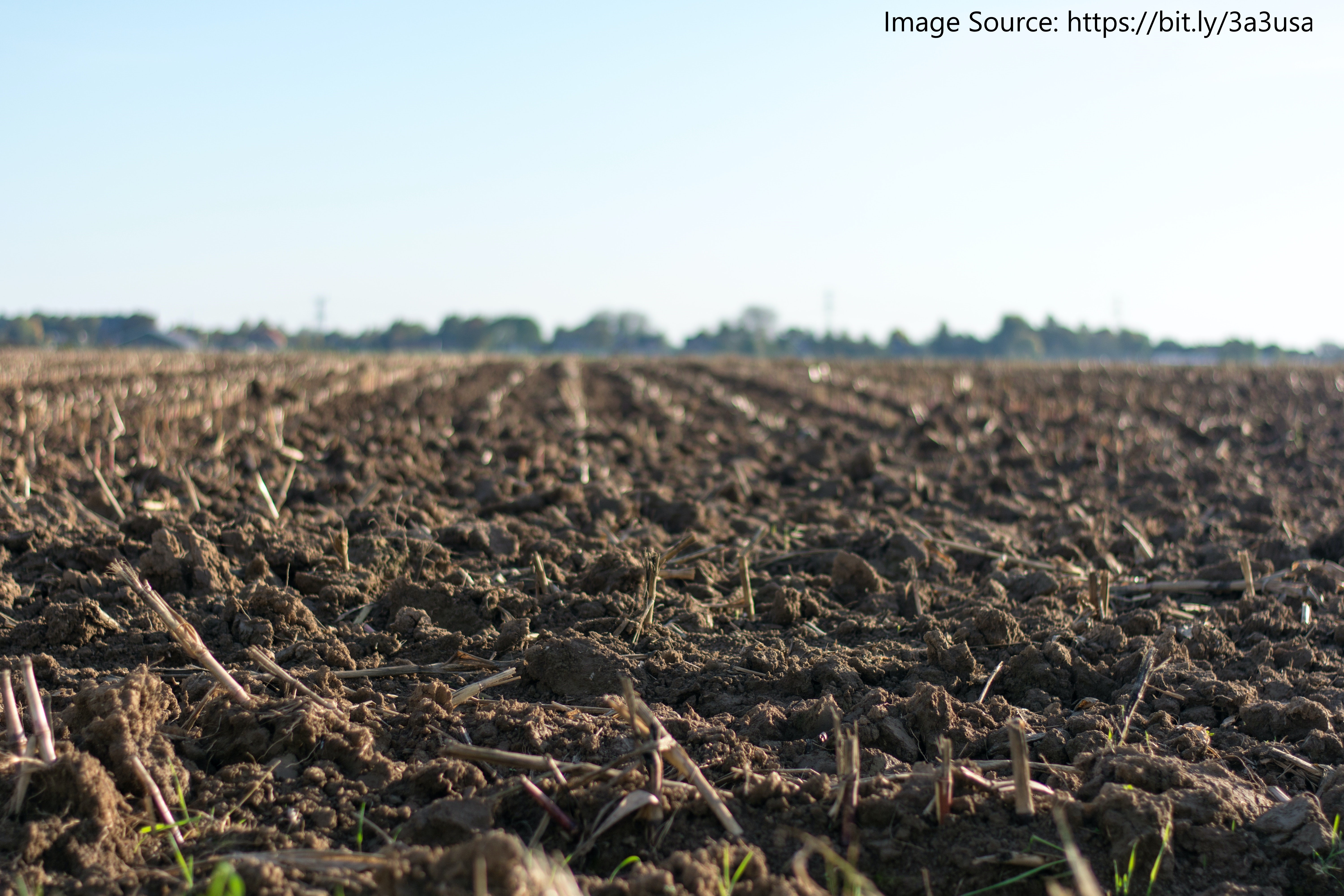
Farmers have been put through the ringer this year with a seemingly unending winter and now constant rain. By now, flooding and oversaturated fields may have introduced a new contender to the ring: nitrogen deficiency.
In this week’s edition of Growing Possibilities, we will discuss the four main processes in which nitrogen (N) is lost from your soil.
N plays incredibly vital roles in plant development; it is needed to construct the plant’s celsls, amino acids, and even DNA. N is also required for the formation of chlorophyll, a compound within plants required for photosynthesis (1).
So how does N deficiency occur? There are four main avenues for the loss of N in soil:
1. Surface volatilization
2. Denitrification
3. Leaching
4. Immobilization
1. Surface volatilization. This is a chemical process that occurs at the soil surface when ammonium from urea or ammonium-containing fertilizers are converted to ammonia gas at high pH (2). Most of the loss comes from the surface application of fertilizer containing urea. The introduction of fertilizer containing urea or manure that is not incorporated into the soil by tillage or rain causes pH levels to rise in soil, initiating the surface volatilization process (3). Wind and warmer temperatures will carry this converted N gas away from your soil.
2. Denitrification occurs when the soil becomes waterlogged and depleted of oxygen, creating an anaerobic environment. Without oxygen, the soil microflora strips the oxygen molecules off the nitrates and nitrites in the soil, converting them into unusable nitrogen gasses, which then evaporate (4).
The availability of oxygen supply within the soil and the types of soil microorganisms will influence the rate of denitrification (5). Keep in mind that denitrification happens naturally all the time, but if the soil has been waterlogged for more than 36 hours, the effect and rate of denitrification increases (5).
3. Leaching occurs when there is more water than the soil can hold; soil particles do not retain nitrate very well because both are negatively charged (3). As a result, nitrate moves easily with water in the soil. Nitrates within the soil are carried away with the water, away from the root zone, and out of the plant’s reach (4).
4. Immobilization occurs when microorganisms within the soil compete against the crops in the field; the microbes take up the nitrates and ammonia, making the N inaccessible to crops (3).
Adding materials with a high carbon (C) to N ratio will intensify the effect of immobilization, as this will increase biological activity and thus increase the microbes’ need for N (3). Immobilization is only temporary, however; once the microbes die, the N in their cells becomes plant available (3).
Now that you know some of the ways N is lost, how can you restore the N in your soil? Luckily, we have a readily available source: our atmosphere is 78% nitrogen (6). The trick is to make it available to your crop.
Biological inoculants are a natural and easy solution to boost N fixation. The bacteria within the inoculant develop nodules on the roots of the crop, drawing N from the atmosphere and making it available to the plant. In return, the plant provides the bacteria with nutrients.
So, if your crops are struggling with N deficiency this year, just remember that some of the N-fixing inoculant like:
XiteBio SoyRhizo and XiteBio PulseRhizo can help your crop next year
● to restore the microbes that die off post-immobilization
● to reinvigorate the soil microflora after your fields have dried
● to increase N fixation for your crops
So, when you are planning for next year’s legume crop, don’t forget the little bugs in the inoculants!
References:
(1) https://eos.com/blog/nitrogen-deficiency/
(2) https://grdc.com.au/resources-and-publications/grdc-update-papers/tab-content/grdc-update-papers/2014/07/factors-affecting-how-much-n-is-lost-and-how-much-is-left-over-time
(3) http://cceonondaga.org/resources/nitrogen-basics-the-nitrogen-cycle
(4) https://www.canr.msu.edu/field_crops/uploads/archive/Nitrogen%20losses%20from%20soil.pdf
(5) https://extension.missouri.edu/publications/wq255
(6) https://climate.nasa.gov/news/2491/10-interesting-things-about-air/#:~:text=The%20air%20in%20Earth’s%20atmosphere,dioxide%2C%20neon%2C%20and%20hydrogen