

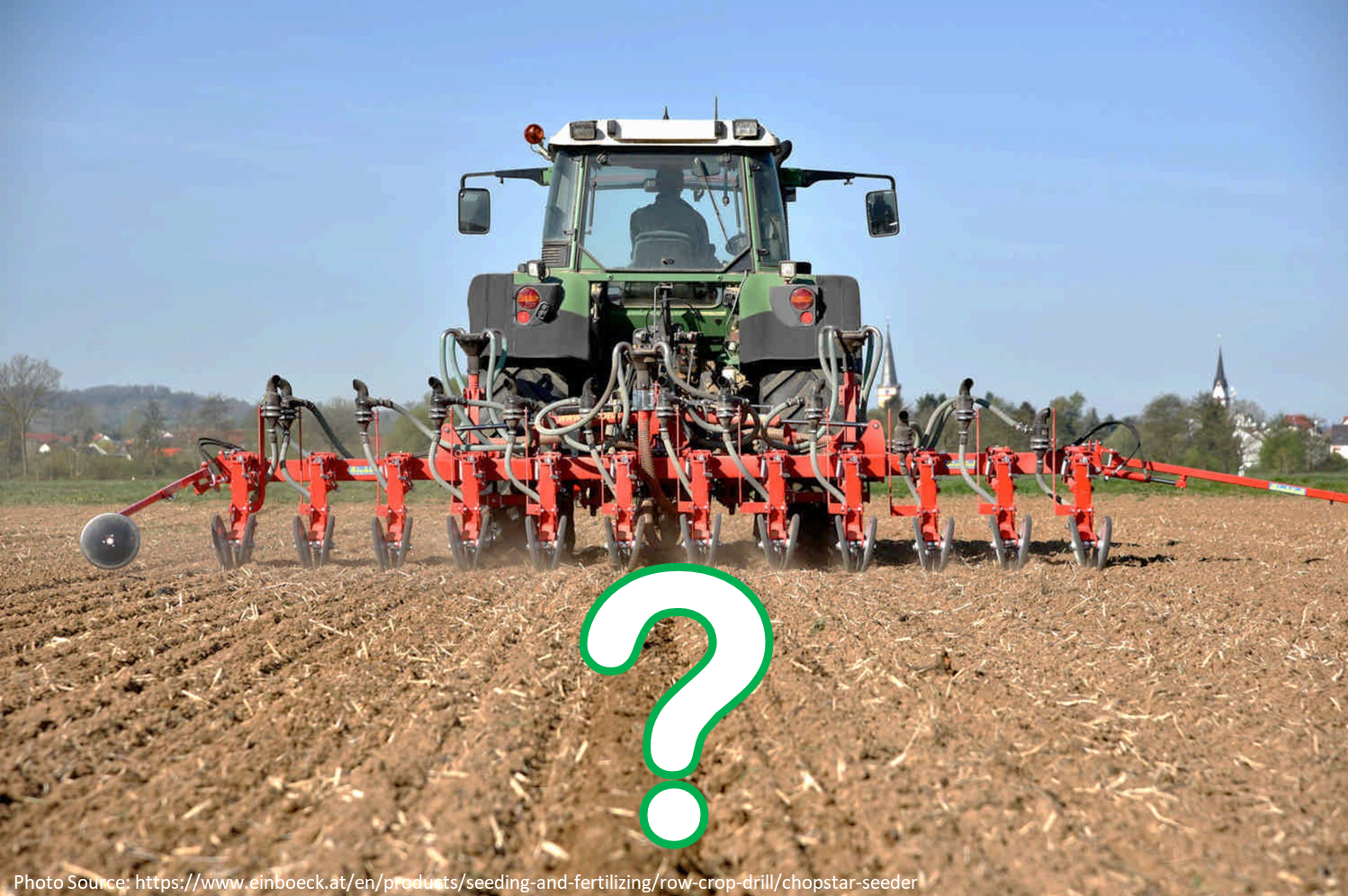
With autumn harvest approaching, many of you will be planning for a winter crop and even seeding it soon. If you are planning this, then now is the time you may be asking yourself: How should I treat my winter crop differently than my spring crop? In this week’s edition of Growing Possibilities, we will be examining some of the important factors to consider when growing the popular winter crops like winter wheat or winter peas, including the importance of inoculation and plant-available soil phosphorous (P).
Phosphate is essential to producing any healthy crop, but winter crops have an added challenge. Cold temperatures increase the binding of phosphates in your soil, reducing the soil P available to your plants from both crop residues and applied fertilizers. For cereals like winter wheat this is an especially critical issue, as they have a higher demand for P than their spring season counterparts (1). An excellent option for ensuring there are plenty of plant-available phosphates for your winter crop is to include a P-solubilizing biological in your crop input plan. P-solubilizing bacteria can take phosphates locked up in your soil and liberate them for use by your growing plants. This increases the efficiency of your applied fertilizer, meaning you don’t need to apply as much of it, and unlocks phosphates already present in your soil, further decreasing your need for fertilizer applications.
Winter crops are often chosen as a cash crop or as a cover crop for a field over winter, but winter peas offer another benefit: Nitrogen (N). Winter peas can add a substantial amount of N to your soil through crop residues after harvest. Spring peas are often added to crop rotations for the same reason, but winter peas have the advantage when providing nitrogen (N) back into soil. Spring peas fix N for approximately 8 weeks during the growing season while winter pea varieties split their N fixation between autumn months and the following spring, fixing N for approximately 12-16 weeks in total (2). This can lead to up to 90-150 lbs/acre of N going back into your soil at the end of harvest for your next crop to benefit from (3).
Some extra considerations you should take during seeding for a winter crop are crop stubble and timing. Seeding your crop into stubble from a previous one allows snow to become trapped and act as an insulator for your young plants during the coldest months. Winter peas are still sensitive to below freezing temperatures and will die in sustained cold below -8°C (18°F) (4). Because of this, earlier is better when seeding any winter crop, with plants entering freezing soil conditions with 6-8 inches of stand having the best survivability (4).
A big part of any spring seeded crop is the application of crop inputs, and for fall seeded crops this is no different. Applying inoculants and biologicals to spring crops and winter crops is quite similar in practice, but there are some cautions to take when applying in the fall.
Just like spring varieties, winter peas form symbiotic relationships with N fixing rhizobia to get the majority of their N nutrition. Because of this, applying a rhizobial inoculant to guarantee nodulation and maximize N fixation is essential. Just make sure that your inoculant of choice is approved for use on winter pea varieties, such as XiteBio® PulseRhizo®, as not all rhizobial inoculants rated for spring peas can carry over their effectiveness to winter ones.
Freezing is a major concern for any biological product. The bacteria in inoculants and ag-biologicals are sensitive to temperature, and below freezing temperatures can reduce their effectiveness or even kill them before you have a chance to put them in the ground (5). Applying at a time when your soil will be above freezing for a short period of time after application can make sure that your beneficial bacteria will still be in optimal condition when they get to your plants. This caution also applies to seed that has been treated with an inoculant. Keep your inoculated seed out of freezing temperatures until the seed is in the ground, and follow all of the manufacturer’s storage instructions to get the best results.
References
1) The Efficient Use of Phosphorus in Agricultural Soils, The Fertilizer Association of Ireland in association with Teagasc, Technical Bulletin Series – No. 4, February 2019
2) McGee, R.J., Eigenbrode, S., Nelson , H., Schillinger, W. (2017). Re‐inventing Austrian winter pea towards developing food quality winter peas. Crops & Soils, 50(4). https://doi.org/10.2134/cs2017.50.0401
3) Clark, Andy. Managing Cover Crops Profitably (3rd ed.). 2008. Beltsville, MD: Sustainable Agriculture Network. P. 135- 141. ISBN: 1437903797, 9781437903799
4) https://www.covercrop.com/?p=214).
5) Liu, M., Feng, F., Cai, T., & Tang, S. (2020). Soil Microbial Community Response Differently to the Frequency and Strength of Freeze–Thaw Events in a Larix gmelinii Forest in the Daxing’an Mountains, China. Frontiers in Microbiology, 11(June), 1–12. https://doi.org/10.3389/fmicb.2020.01164.